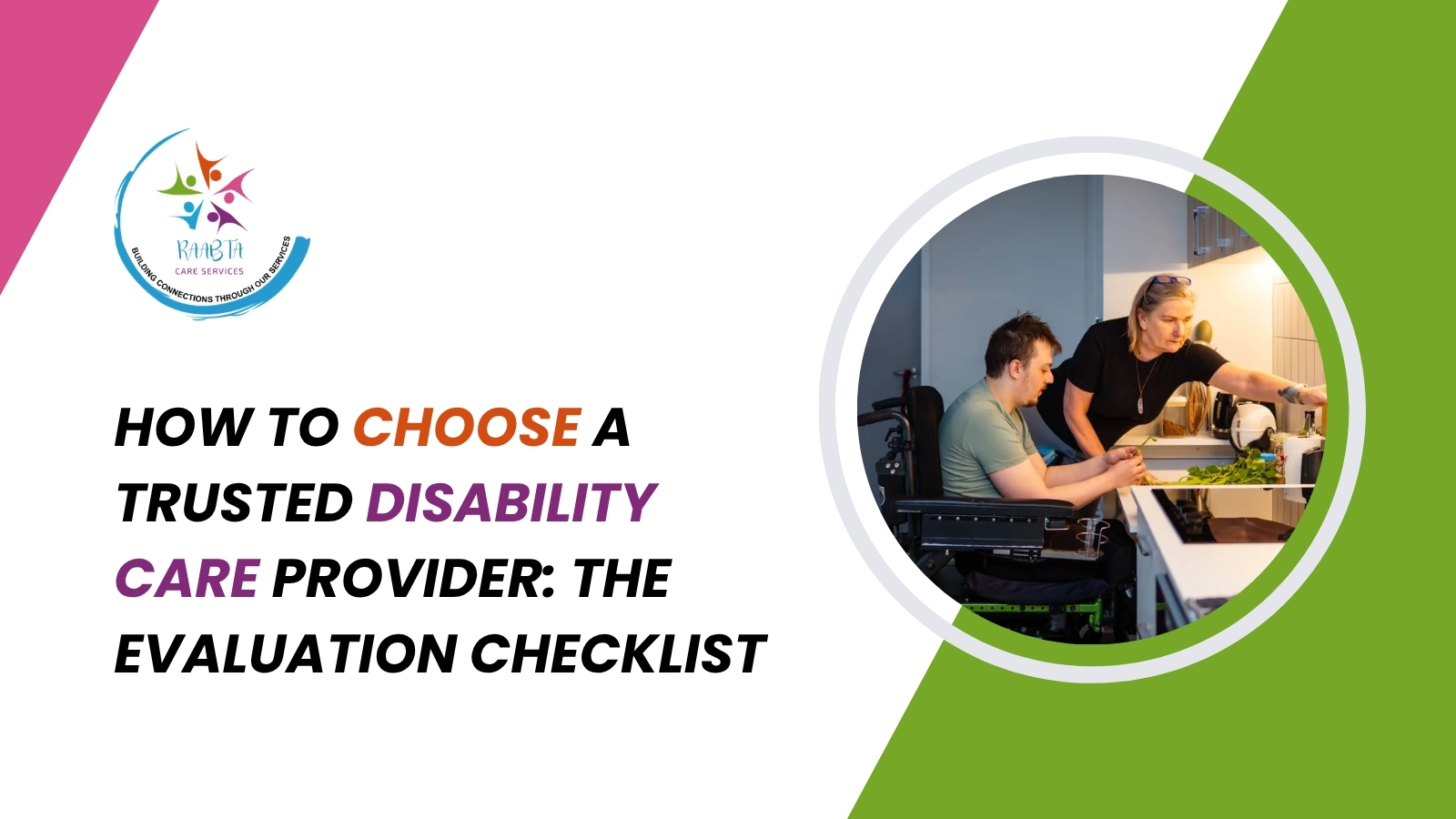
Support worker assisting a man in a wheelchair with meal preparation in the kitchen

How to Choose a Trusted Disability Care Provider: The Evaluation Checklist

Selecting a reliable disability support team across Victoria requires evaluating real daily operational standards, shift reliability, and communication practices. Families deserve complete confidence that their chosen care organization prioritizes safety, dignity, and personalized independence.

Use this field-tested audit framework to make an informed choice before signing any NDIS service agreement.

To evaluate an NDIS provider families can rely on, verify support worker continuity, emergency response protocols, fee transparency, compliance with the NDIS Quality and Safeguards Commission, and goal-tracking systems. Auditing these operational factors upfront prevents sudden care interruptions and ensures consistent, personalized daily assistance.

1. Audit Support Worker Continuity and Roster Stability

High staff turnover breaks care consistency and forces participants to re-explain personal preferences constantly. A quality provider establishes steady scheduling to safeguard long-term comfort and familiarity.

  • [ ] Does the organization assign a dedicated primary support team to ensure familiar faces every week?
  • [ ] Are support worker introductions conducted prior to beginning regular shifts in the participant’s home?
  • [ ] Is comprehensive training provided on individual care plans, dietary needs, and personal routines?

This level of stability builds trust while simplifying everyday living routines like Household Tasks.

2. Inspect Emergency Escalation and Shift Backup Protocols

Unexpected staff illnesses occur, but participant safety depends on immediate, organized backup systems. A trustworthy service provider never leaves care gaps unaddressed.

  • [ ] Is there an active 24/7 emergency escalation phone line for after-hours participant support?
  • [ ] How quickly is a qualified replacement worker dispatched during an unplanned staff absence?
  • [ ] Are clear emergency response protocols documented directly within your written service agreement?

Evaluating backup readiness guarantees reliable care during unexpected shift disruptions or emergency situations.

3. Verify Active Skill Development and Community Inclusion Programs

Quality disability assistance extends far beyond basic supervision; it must actively foster personal growth, confidence, and community connection.

  • [ ] Are daily routines structured around individual goal progression and independence building?
  • [ ] Does support include structured community access through Innovative Community Participation?
  • [ ] How are personal milestones recorded, evaluated, and reviewed with the participant over time?

4. Review Smooth Life Transitions and Goal Alignment

Major life changes—such as moving into independent housing or transitioning out of school—require careful, coordinated planning across all support tiers.

  • [ ] Does the team assist with structured Assist Life Stage Transition plans?
  • [ ] Are family members, guardians, and advocates included in long-term support strategy discussions?
  • [ ] How flexible and adaptable is the overall care plan as individual needs and goals evolve?

5. Validate Regulatory Compliance and Transparent Invoicing

Billing surprises and compliance oversights create unnecessary anxiety for participants and plan managers alike. Complete financial transparency is non-negotiable.

  • [ ] Is the organization fully registered and compliant with the NDIS Quality and Safeguards Commission?
  • [ ] Are monthly invoice line items detailed, transparent, and aligned with actual service hours delivered?
  • [ ] Is there a straightforward, low-friction process for submitting participant feedback or concerns?

Evaluating these five operational areas ensures your chosen Disability Care Melbourne team delivers safe, dignified, and reliable support tailored strictly to long-term participant success.

FREQUENTLY ASKED QUESTIONS (FAQ)

How do I choose a good NDIS disability care provider in Melbourne?

Audit providers for worker continuity, 24/7 emergency protocols, transparent billing, regulatory registration, and person-centred care approaches tailored to personal goals.

What questions should I ask an NDIS care provider before signing an agreement?

Ask about support worker turnover rates, backup shift procedures, staff matching processes, cancellation terms, and exact pricing breakdowns for core supports.

Can I change my NDIS care provider in Victoria if support worker turnover is too high?

Yes. Participants hold complete choice and control to end current service agreements by providing the required notice period specified in their contract.

What is the role of the NDIS Quality and Safeguards Commission?

The commission acts as an independent agency regulating NDIS providers, enforcing safety standards, managing complaints, and improving overall care quality across Australia.

How does support worker matching work?

Providers assess participant preferences, communication needs, shared interests, and daily schedules to assign compatible support workers for long-term consistency.

GET IN TOUCH WITH RAABTA CARE SERVICES 

Ready to partner with a trusted team dedicated to dignified, person-centred support across Victoria? Contact Raabta Care Services today to explore tailored care options for your independent living goals.

  • Phone: 0490 717 220
  • Email: info@raabtacareservices.com.au
  • Address: Melbourne, VIC
  • Website: https://raabtacareservices.com.au/
  • Social Profiles / Links: ABN: 33667212704 | NDIS Reg ID: 4JUC4ODS
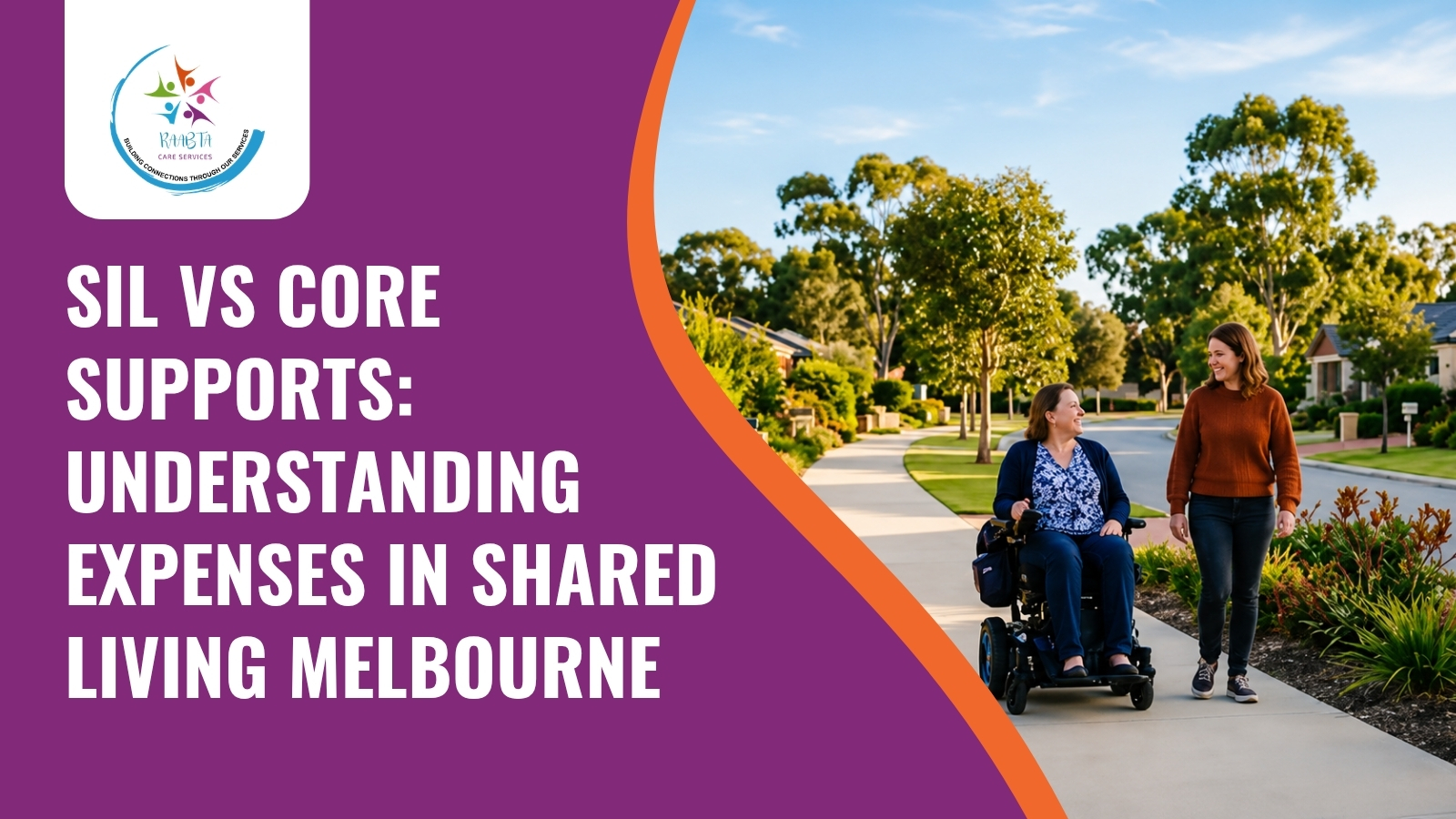
Woman in power wheelchair walking with support worker in Melbourne neighborhood

SIL vs Core Supports: Understanding Expenses in Shared Living Melbourne

Moving into a Supported Independent Living (SIL) home across metropolitan Melbourne can raise many financial questions. Many Victorian participants and families assume the NDIS covers every household expense, but funding is divided into distinct categories with strict rules.

Understanding the difference between SIL funding, Core Supports, and personal out-of-pocket costs helps you budget confidently while avoiding unexpected living expenses in Shared Living Melbourne arrangements.

Who Is This Guide For?

This breakdown provides practical clarity for key stakeholders across Greater Melbourne:

  • First-time SIL participants preparing to move into shared accommodation.
  • Parents and family members planning supported living options.
  • NDIS Support Coordinators structuring funding proposals.
  • Plan managers verifying claims against NDIS line items.
  • NDIS nominees managing participant financial allocations.

Defining NDIS Funding Rules in Shared Homes

Supported Independent Living (SIL) funds 24/7 support staff for personal care, cooking, and daily routines in shared arrangements. Core Supports cover flexible everyday needs like personal transport or consumables. Neither budget pays for rent, food, or utilities, which participants cover out-of-pocket using personal income.

NDIS Shared Living Budgets

NDIS-Funded (SIL / Core) Participant-Paid (DSP / Rent Assistance)
• 24/7 Support Worker Care • Bedroom Rent / Tenancy
• Daily Routine Assistance • Groceries & Board Meals
• Skill-Building Programs • Gas, Electricity, Water
• Disability Consumables • Internet & Personal Uses

What NDIS SIL Funding Covers vs What It Excludes

Understanding financial allocations prevents unexpected living expenses for families exploring Supported Independent Living Melbourne. The NDIS funds the active human assistance required to live safely in a home.

Through dedicated rostered care, SIL covers night support, morning personal care, meal preparation assistance, and shared household supervision.

According to the latest NDIS Pricing Arrangements and Price Limits, SIL funding is designed specifically for disability-related support rather than accommodation costs.

Funding levels are determined through functional capacity assessments and approved support ratios (such as 1:1, 1:2, or 1:3), ensuring participants receive care matched to their individual needs. It never pays for property acquisition or standard leasing fees.

Core Supports: Flexible Assistance Boundaries

Core funding provides everyday support across four categories: Assistance with Daily Life, Transport, Consumables, and Participate Community activities.

While general Core funds allow flexibility across everyday categories, SIL is managed as a “stated support” within Assistance with Daily Life. This keeps funding dedicated to designated rostered care workers.

Participants utilizing Daily Living Support Melbourne cannot swap SIL allocations to purchase high-cost assistive technology or pay standard living bills. Maintaining distinct allocations ensures core household staffing remains stable.

Functional Assessment and SIL Eligibility

SIL funding is not automatically included in every NDIS plan. Participants must demonstrate that ongoing 24/7 support is reasonable and necessary through detailed functional assessments and supporting evidence before funding is approved by the NDIA.

A Life Stage Transition specialist or support coordinator often assists during this evidence-gathering phase to ensure all daily support needs are correctly documented.

Out-of-Pocket Expenses: Rent, Food, and Utilities

Every resident in a shared arrangement pays out-of-pocket costs known as room and board. These personal expenses are typically funded through the Disability Support Pension (DSP) and Commonwealth Rent Assistance.

Household Expense Item Funding Source Description
Support Workers (24/7 Care) NDIS SIL Funding Rostered personal care, overnight care, daily supervision.
Community Activities NDIS Core Supports Transport assistance and community access participation.
Bedroom Rent & Occupancy Participant (DSP / Rent Assist) Private lease contribution for living in the property.
Shared Meals & Groceries Participant (Board Contribution) Weekly pooled fund for food, cooking, and groceries.
Utilities (Power, Gas, Water) Participant (Board Contribution) Equal split of shared residential utility accounts.

Establishing clear residential agreements in an SIL Property guarantees total transparency regarding weekly contributions.

Optimizing Household Budgets and Skill Building

Combining daily assistance with the Development of Life Skills helps participants gain independence in meal planning, individual budgeting, and shared home tasks.

Every participant’s funding structure is unique. Raabta Care Services works alongside participants, families, support coordinators, and plan managers across Melbourne suburbs to help ensure funding is used appropriately while supporting long-term independence.

FREQUENTLY ASKED QUESTIONS (FAQ)

  1. Does NDIS Core Supports pay for rent in shared living?
    No. NDIS funding strictly covers support staff. Rent is an out-of pocket living expense paid via personal income or DSP.
  2. What is the difference between SIL and Core funding?
    SIL is a stated support for rostered care staff in shared homes. General Core funding provides flexible everyday assistance.
  3. How much do participants pay out of pocket for board in SIL?
    Out-of-pocket board usually uses 50% to 75% of the Disability Support Pension plus Rent Assistance, covering food and utilities.
  4. Can I transfer SIL funds to buy consumables or equipment?
    No. SIL is a stated support inside Assistance with Daily Life and cannot be moved to purchase products or equipment.
  5. Who pays for shared household groceries in SIL homes?
    Residents pool personal funds through a weekly board fee to cover shared groceries, food ingredients, and kitchen provisions.

GET IN TOUCH WITH RAABTA CARE SERVICES 

Unsure which household expenses are covered by your NDIS plan? Raabta Care Services can help you understand SIL funding, Core Supports, and residential costs before you move into shared accommodation. Speak with our Melbourne team today for personalized guidance tailored to your goals.