
Participate Community Melbourne

Breaking Down the 2026 NDIS Rules for Participating Community Melbourne Programs

Getting out into the world, building strong relationships, and exploring new interests shouldn’t feel like a luxury. For NDIS participants across Victoria, active community inclusion is one of the most vital pieces of a fulfilling, independent life.

However, recent federal adjustments regarding community access and travel allowances have caused significant uncertainty. Many families are struggling to understand how their social budgets are being evaluated during reviews.

At Raabta Care Services, we believe that clear facts eliminate confusion. You deserve an open look at what the 2026 guidelines mean for your social schedule and community goals. Let’s dive into what is shifting with your community and travel funding this year.

1. The Strict Focus on Outcomes Over Entertainment

For a long time, planning an outing was simply about choosing a fun location. Under the newly implemented 2026 guidelines, planners are applying heavy scrutiny to unstructured social hours.

The NDIA is shifting away from funding generic lifestyle activities that don’t show measurable skill development. To protect your plan, every activity must link directly to an independent capacity goal. Choosing a team that understands how to structure Participate Community Melbourne pathways ensures your social hours double as clear independence training.

2. A New Era of Capacity Building via Group Formats

To maximize sustainability across the scheme, the agency is prioritizing peer-based environments. Traditional solo social supports are facing higher evidentiary bars during plan adjustments.

Structured Group Centre Activities Melbourne programs are highly favored by modern planners because they promote shared staffing efficiencies while providing excellent social environments. These hub-based settings allow participants to build deep communication skills, collaborative habits, and lasting peer networks in a highly supported space.

3. The Rising Value of Mainstream and Innovative Access

Planners are actively moving away from traditional “day program” structures that segregate participants from the broader public. The 2026 framework explicitly rewards programs that foster mainstream inclusion.

Enrolling in Innov Community Participation Melbourne pathways allows you to engage in real-world settings like local workshops, tech programs, and community volunteer groups. These innovative, skill-focused pathways prove to auditors that your funding is being used to build sustainable, lifelong personal independence.

4. Navigating the New Three-Tiered Transport Rules

The rules surrounding how you get from point A to point B have become much more rigid. The NDIA divides transport funding into a strict three-level index based on your work, study, or daily community participation goals.

Relying solely on your core allowance without balancing provider travel can lead to sudden out-of-pocket costs. Securing structured Transport Assistance Melbourne ensures you seamlessly combine your personal travel allowance with Activity-Based Transport (where a support worker drives you during a shift), keeping your transit budget optimized.

5. Stricter Registration Compliance for Community Providers

With massive regulatory updates sweeping the disability sector, small, unregistered provider networks are facing tough new operational limits when managing community outings.

Working with an established, fully registered NDIS Provider Melbourne families trust provides total protection against sudden routine changes. Registered agencies follow rigorous practice safety standards, document every community hour accurately against federal laws, and ensure your funding remains audit-proof.

6. FREQUENTLY ASKED QUESTIONS (FAQ)

What qualifies as an innovative community program?

Innov Community Participation Melbourne refers to highly targeted, capacity-building activities—like mainstream employment preparation, community classes, or community volunteer transitions—that actively build long-term independence.

How do group activities protect my NDIS funding?

Planners favor Group Centre Activities Melbourne because they balance community access with shared staffing structures. Proving you thrive in group environments keeps your capacity-building budget highly defensible during reviews.

Can I use my transport allowance for any travel?

Yes. If you receive a direct transport allowance, it is deposited fortnightly into your account to cover private travel like taxis, rideshares, or fuel costs associated with your primary disability goals.

What is the difference between personal transport and provider travel?

Personal travel is your direct allowance to get around town, while Transport Assistance Melbourne covers “Activity-Based Transport,” which is when a provider uses their own vehicle to transport you safely during your scheduled support hours.

How do I adjust my community goals for the 2026 standards?

Your goals must switch from passive descriptions (e.g., “going to the movies”) to active, outcome-based phrases (e.g., “building public communication habits and transport navigation skills through weekly local community groups”).

Get Started

Secure Your Peace of Mind with Raabta Care Services

Stepping out into your local community and building new relationships shouldn’t feel stressful or complicated. At Raabta Care Services, we help Melbourne families navigate these intricate community and transport regulations while keeping your personal choices completely front and center.

We focus on building highly supportive group environments, creating engaging innovative pathways, and ensuring every hour of your community plan is backed by bulletproof evidence. Let’s work together to expand your world safely and confidently.

Get in Touch With Our Friendly Melbourne Team Today

  • Phone Channel: 0490 717 220
  • Email Channel: info@raabtacareservices.com.au

Connect With Us:

  • Facebook: https://www.facebook.com/raabtacareservices
  • Instagram: https://www.instagram.com/raabtacareservices
  • Twitter: https://x.com/raabtacare
  • LinkedIn: https://www.linkedin.com/company/raabta-care-services
Daily Living Support Melbourne

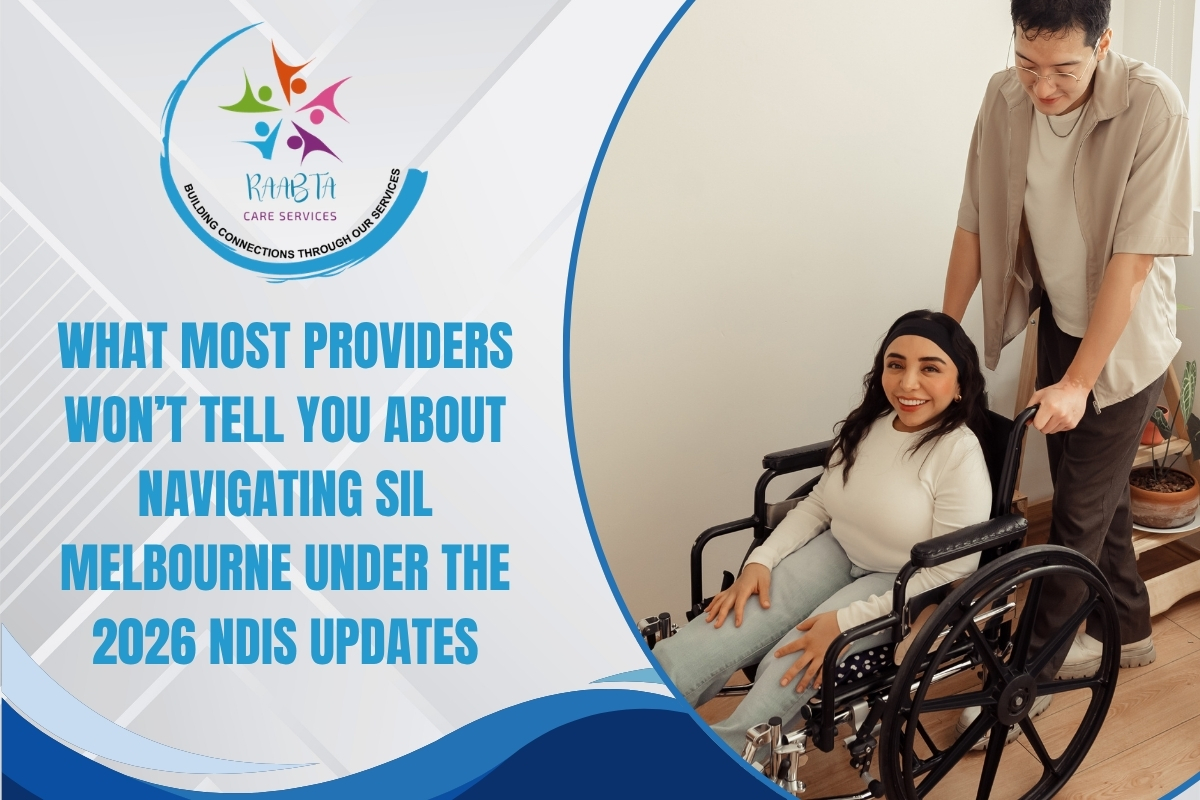
What Most Providers Won’t Tell You About Navigating SIL Melbourne Under the 2026 NDIS Updates

Finding the right housing and daily care setup can be one of the most emotional journeys an NDIS participant and their family will ever take.

Lately, shifting regulations around Supported Independent Living Melbourne arrangements have caused a great deal of confusion.

Many families are hearing conflicting information about how shared housing models are being funded moving forward.

At Raabta Care Services, we believe transparency is the foundation of trust. You deserve clear, unvarnished facts to confidently plan your independent future. Let’s pull back the curtain on how the 2026 NDIS guidelines impact your home and daily living budgets.

1. The Roster of Care (RoC) Faces Unprecedented Scrutiny

For a long time, submitting a high-intensity Roster of Care (RoC) was standard practice for securing overnight or 24/7 care. Under the newly implemented 2026 frameworks, planners are reviewing every single hour of requested line-item funding with extreme detail.

If your documentation cannot explicitly prove why a 1:1 or shared support ratio is required for specific tasks, the NDIA is defaulting to lower-ratio funding models. Securing evidence-backed Daily Living Support Melbourne ensures every hour listed on your roster is fully justified by functional necessity, not just preference.

2. A Shift Toward True “Shared Living” Efficiencies

The federal government’s focus on long-term scheme sustainability means solo SIL arrangements are becoming incredibly rare. The NDIA is actively prioritizing Shared Living Melbourne models that encourage participants to share core support staff.

What many agencies hide is that if a vacancy occurs in your shared home, your funding might face administrative pressure during reviews. Partnering with a proactive provider helps keep your living arrangements stable, compliant, and well-matched to compatible housemates.

3. Clear Separation Between Housing and Care

The strict regulatory wall between Specialist Disability Accommodation (SDA—the physical building) and SIL Melbourne (the care services provided inside) is being policed more rigidly than ever.

Planners are looking to eliminate any conflict of interest where a participant feels forced to use a specific care provider just because of where they live. You have the absolute right to choose your care team independently of your tenancy agreement, preserving your choice and control.

4. Mandatory Skill-Building Goals in SIL Environments

SIL is no longer viewed by planners as a passive, lifetime care placement. Under the 2026 rules, your daily care routines must actively demonstrate a focus on capacity building.

If your support logs only show staff doing things for you rather than teaching you how to do them, your daily core budget faces risk during scheduled renewals. True independent living means learning the micro-steps of meal preparation, household management, and home safety at your own pace.

5. Stricter Compliance for Supported Independent Living Providers

To protect vulnerable participants, the government has introduced rigorous safety and quality practice standards specifically targeting high-care settings.

Unregistered independent workers or unaligned agencies are facing major legal boundaries when delivering complex, 24/7 shared care. Working with a fully registered, established NDIS Provider Melbourne families trust ensures your housing setup remains legally compliant and entirely safe from sudden service disruptions.

6. FREQUENTLY ASKED QUESTIONS (FAQ)

What is the main difference between SIL and Shared Living?

SIL Melbourne refers specifically to the NDIS funding for support workers who help you build skills and complete daily tasks inside your home, while Shared Living Melbourne is the broader arrangement of sharing a household with other participants.

Can I choose my own SIL provider if I move into a shared home?

Yes. Under current guidelines, your housing agreement and your support services must remain distinct, allowing you to choose a team specializing in Supported Independent Living Melbourne that aligns with your goals.

Will my SIL funding be cut if a housemate moves out?

Existing plans generally remain secure during vacancies, but closer scrutiny is applied during renewals. It is vital to work with a provider that manages occupancy matches efficiently.

Does Daily Living Support cover my rent or groceries?

No. NDIS funding for Daily Living Support Melbourne explicitly covers support and care services. Everyday lifestyle costs like rent, utilities, and groceries must be paid out of your personal income or disability pension.

How does Raabta Care ensure compliance with the 2026 rules?

As a registered provider delivering Supported Independent Living Melbourne, we follow rigorous federal safety standards and maintain meticulous data-tracking to ensure your funding aligns perfectly with updated compliance laws.

Get Started

Secure Your Peace of Mind with Raabta Care Services

Moving into independent housing or restructuring your daily care shouldn’t feel stressful or overwhelming. At Raabta Care Services, we help Melbourne families navigate these intricate funding updates while keeping your personal dignity and choices front and center.

We focus on building stable, calm environments, gathering bulletproof functional evidence, and making sure your home care routines are entirely audit-safe. Let’s work together to protect your independent lifestyle.

Get in Touch With Our Friendly Melbourne Team Today

Phone Channel: 0490 717 220

Email Channel: info@raabtacareservices.com.au

Connect With Us:

Facebook: https://www.facebook.com/raabtacareservices

Instagram: https://www.instagram.com/raabtacareservices

Twitter: https://x.com/raabtacare

LinkedIn: https://www.linkedin.com/company/raabta-care-services



Life Stage Transition Support Melbourne

5 Mistakes Families Make When Setting Up Assistance with Life Stage Transition Melbourne

Navigating major lifestyle shifts like finishing school, entering the workforce, or moving homes can feel incredibly overwhelming.

For many NDIS participants across Victoria, these major milestones bring a mix of excitement and deep anxiety.

While trying to manage these changes, many families accidentally fall into common traps that put their funding at serious risk.

Under the strict 2026 NDIS guidelines, the way transition budgets are assessed has become much tighter.

At Raabta Care Services, we believe that knowing these pitfalls in advance gives your family complete choice and control.

Let’s break down the five most frequent mistakes families make and how you can easily avoid them.

1. Waiting Too Late to Start the Transition Planning Process

Many families wait until a few weeks before school ends or a major move happens to ask for help.

Under the current NDIS guidelines, building a successful transition framework requires months of clear, documented evidence.

Securing early, proactive Life Stage Transition Support Melbourne gives you the time needed to prepare comprehensive functional reports.

Starting the planning process 6 to 12 months ahead ensures your budget matches the true cost of your upcoming lifestyle shift.

2. Treating Transition Support Like Standard, Ongoing Care

A massive trap is assuming that transition funding operates the exact same way as standard, everyday core care.

True Assistance with Life Stage Transition Melbourne is intended by planners to be a time-limited, goal-focused intervention.

It should have a clear beginning, middle, and end centered entirely around conquering a specific life milestone.

If your support worker is simply sitting with you rather than actively guiding you through a milestone plan, auditors may cut the budget.

3. Neglecting Labeled Goals for Independent Skill Building

Planners are heavily scrutinizing plans that do not show a clear path toward long-term personal growth.

If your plan documentation lacks explicit goals tied to Life Skills Development Melbourne, your funding might decrease during reviews.

Every single hour of support must actively prove that it is helping you build your personal self-reliance and confidence.

Focusing on targeted capacity building ensures you learn valuable real-world habits like road safety, budgeting, and using public transport safely.

4. Separating Household Assistance from Real-World Training

Relying entirely on a support worker to clean up after you without learning the steps yourself is a major systemic trap.

When you isolate domestic help from active mentoring, you miss out on building crucial independent living capabilities.

Combining your necessary Household Tasks Support Melbourne with real-world training ensures you actually learn to manage your own living space.

The Independence Rule: We focus on teaching the micro-steps of cooking, laundry, and home safety so you eventually take the lead in your own household.

5. Partnering with Providers Who Lack Long-Term Compliance Teams

With massive federal regulatory audits taking full effect, choosing an unaligned or unregistered agency puts your care at risk.

Small, unregistered independent workers are facing much tougher restrictions when it comes to delivering complex milestone supports.

Working with an established, fully compliant team ensures your daily care routines never face a sudden, unexpected stop.

An approved NDIS Provider Melbourne families trust follows updated safety standards, keeping your personal funding safe and audit-proof.

5. INTERNAL LINK OPTION

Next Step for Your Plan: Read our next guide on Life Skills Development Melbourne strategies here.

6. FREQUENTLY ASKED QUESTIONS (FAQ)

When should we start planning for a life stage transition?

You should ideally begin organizing your support structure 6 to 12 months before the major routine change takes place.

What makes transition support different from standard care?

Transition support focuses specifically on time-limited milestone goals rather than just providing permanent, ongoing daily assistance.

Can skill development help with social anxiety?

Yes, our tailored programs focus heavily on building communication habits and community confidence in highly supportive environments.

How do household supports build real independence?

Instead of just doing the chores for you, we actively mentor you through the tasks to build independent living skills.

What happens if our provider fails an NDIS audit?

Your services could be suddenly disrupted, which is why working with a registered, fully compliant provider is absolutely essential.

7. READY TO GET STARTED

Secure Your Peace of Mind with Raabta Care Services

Stepping into a brand-new phase of life does not have to feel chaotic or stressful for your household.

As a premier provider of Life Stage Transition Support Melbourne families trust, we help you navigate new routines seamlessly.

We focus on creating calm environments, protecting your dignity, and ensuring your Disability Care Melbourne plan is completely bulletproof.

Let’s design a practical framework that keeps your choice and control completely front and center.

Get in touch with our friendly Melbourne team today to confidently start your next independent chapter.

Get Started

Phone Channel: 0490 717 220

Email Channel: info@raabtacareservices.com.au

Website: https://raabtacareservices.com.au/

ABN: 33667212704 | NDIS Registration ID: 4JUC4ODS

Connect With Us:

Facebook: https://www.facebook.com/raabtacareservices

Instagram: https://www.instagram.com/raabtacareservices

Twitter: https://x.com/raabtacare

LinkedIn: https://www.linkedin.com/company/raabta-care-services

 

Disability Care Melbourne

What Most Disability Care Melbourne Providers Won’t Tell You About the 2026 Funding Overhaul

Navigating the NDIS always comes with a bit of stress for families.

Lately, the buzz around the 2026 NDIS structural changes has left many participants feeling deeply anxious.

While many agencies act like nothing is shifting, the rules on how budgets are built are changing fast.

At Raabta Care Services, we believe that honest facts bring true peace of mind.

You deserve to know exactly what these national updates mean for your daily support.

Let’s pull back the curtain on what is actually happening with your funding this year.

1. Diagnosis Checklists Do Not Guarantee Access Anymore

For years, having a specific medical diagnosis was your main ticket into the scheme.

The new framework shifts focus away from what your disability is called on paper.

Instead, the focus is entirely on your real-world functional capacity during day-to-day living.

If your provider is not actively helping you track and document your everyday routine, your funding might decrease.

Budgets will be guided heavily by new, structured Support Needs Assessments rather than old doctor letters.

This is why securing proactive Disability Care Melbourne is more vital than ever to accurately prove your daily needs.

2. Big Trims for Social and Community Budgets

The government is placing a major growth cap on the scheme to keep it sustainable.

One of the main areas facing sudden pressure is the social and community participation funding bucket.

Many standard, unstructured lifestyle requests are facing much tougher scrutiny during reviews.

To protect this part of your plan, you need clear evidence showing how these activities build your real skills:

  • Every community activity must link directly to a specific capacity-building goal.
  • Generic lifestyle or holiday choices are being explicitly rejected by planners.
  • Programs must show a clear path toward independence rather than just passing the time.

Choosing a provider that understands comprehensive Disability Support Melbourne ensures your community activities stay fully justified.

3. Strict Rules on What Counts as a Funded Support

Planners are cracking down on flexible spending across different budget rows.

The newly updated guidelines strictly define what the scheme will and will not pay for.

Money can only be spent on impairments that are explicitly documented in your approved file.

Important Warning: The agency is increasing retrospective audits on fund usage. Trying to claim everyday supermarket groceries or general entertainment items can lead to a debt notice.

Working closely with a team that provides structured NDIS Care Melbourne keeps your spending compliant and safe.

4. Unscheduled Plan Reviews Are Much Harder to Get

In the past, you could easily request a plan review if you felt your budget was too low.

Under the 2026 rules, unscheduled plan reassessments are heavily restricted to limit constant budget shifts.

You can generally only get an emergency review under two strict conditions:

  1. There is a documented, long-term change in your physical or psychosocial functional capacity.
  2. An unexpected, major shift happens in your living, school, or informal family care setup.
5. Mandatory Registration for Key Care Services

To clear out low-quality services, the government is forcing much stricter provider compliance laws.

Key service sectors, including Supported Independent Living (SIL), must face mandatory registration pathways.

This means small, unregistered independent workers may no longer be allowed to provide complex care.

Working with an established, fully compliant team ensures your daily care routines never face a sudden stop:

  • An approved NDIS Provider Melbourne must follow updated, rigorous practice safety standards.
  • Registered providers give you absolute peace of mind during compliance audits.
  • Your funding stays safe because every service hour aligns with strict federal laws.

5. INTERNAL LINK OPTION

Next Step for Your Plan: Read our next guide on NDIS Provider Melbourne strategies here.

6. FREQUENTLY ASKED QUESTIONS (FAQ)

Will my current funding budget drop immediately?

No, existing plans stay active during the gradual rollout, but expect closer scrutiny when your next scheduled renewal arrives.

What is a Support Needs Assessment?

It is a structured meeting where a trained assessor looks at your actual daily routines, challenges, and environmental barriers.

Can I still use my funding flexibly?

Flexibility is much lower now; every single dollar spent must connect directly to your primary, documented disability needs.

What happens if I make a wrong claim?

The NDIA is expanding audits, meaning incorrect claims can lead to automated rejections or formal debt recovery actions.

Are children under 8 affected by this?

Yes, children with low-to-moderate developmental delays will gradually transition to early childhood programs outside the main NDIS system.

Secure Your Peace of Mind with Raabta Care Services

Navigating these massive funding updates does not have to feel overwhelming or scary.

As a dedicated NDIS Provider Melbourne families trust, we help you stay ahead of the rules while keeping your choices front and center.

We focus on creating calm environments, protecting your dignity, and ensuring your Disability Care Melbourne plan is completely bulletproof.

Let’s chat about how to structure your evidence before your next scheduled planning meeting.

Get in touch with our friendly Melbourne team today to protect your independent lifestyle.

Phone Channel: 0490 717 220

Connect With Us:

Facebook: https://www.facebook.com/raabtacareservices

Instagram: https://www.instagram.com/raabtacareservices

Twitter: https://x.com/raabtacare

LinkedIn: https://www.linkedin.com/company/raabta-care-services